
![[Aggregator] Downloaded image for imported item #270735](https://batshitcrazy.com/wp-content/uploads/2026/09/header-2-1068x801.jpg "[Aggregator] Downloaded image for imported item #270735")
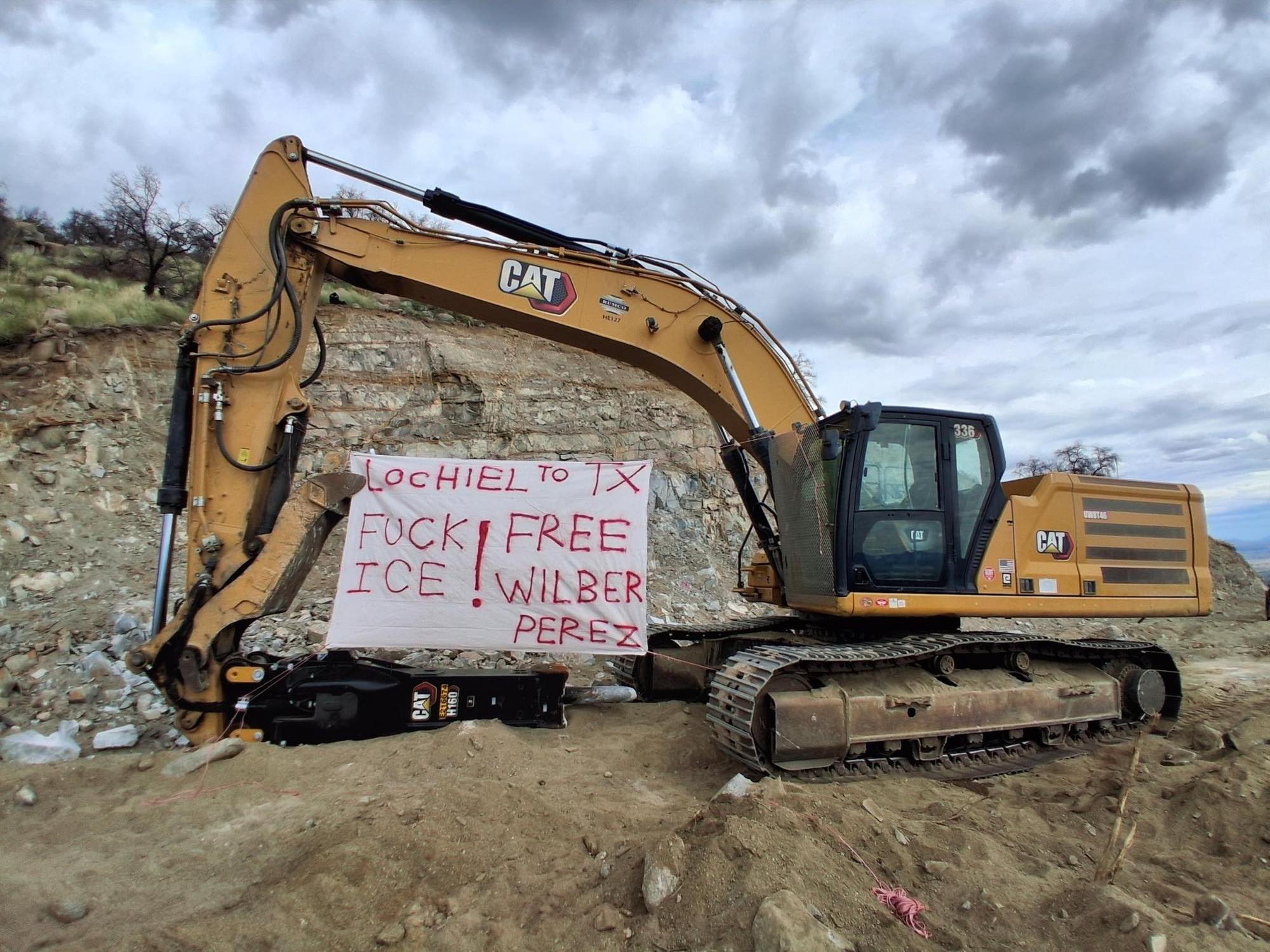
All around the United States, people are organizing to resist the federal mercenaries who carry out Immigration and Customs Enforcement. Here, we announce three upcoming mobilizations and share reports from two recent confrontations.
In Arizona, people have been blocking the construction of the border wall since July 27; they are calling for people from around the country to come join them. In the Twin Cities, people are calling for a countrywide day of action on October 3 to express solidarity with the Minnesota 15, who have been federally charged for allegedly conspiring to resist Operation Metro Surge. In Vermont, people have organized a week of action for October 4-9 and are inviting people to come participate or carry out solidarity actions elsewhere. Clashes with federal mercenaries have recently broken out in Austin, Texas and Frederick, Maryland.
Awareness of the harm that ICE is inflicting on communities peaked in January, during the massive popular resistance against the federal occupation of the Twin Cities. Yet deportations have only increased since then, with most of the abductions taking place behind closed doors as ICE agents work with police and jails to capture immigrants. The recent wave of resistance to ICE offers a crucial chance to take the offensive ahead of what is bound to be a tumultuous fall.
As many liberals shift to focusing on the midterm elections this November, naïvely hoping that elections alone will provide change, it is especially important to continue to focus on what we can accomplish directly by means of collective power. However the elections turn out, only effective grassroots action can create a situation in which neither party will be able to continue the violence of ICE.
Remember, the abduction and deportation of immigrants did not begin under Donald Trump; as recently as last year, mainstream Democrats were proposing to adopt Trump’s xenophobic policies wholesale. Even if the far right loses control of the government, whoever inherits state power will maintain every repressive policy that we do not force them to discontinue. The victory that the movement against ICE achieved in the Twin Cities, forcing Trump to end Operation Metro Surge and fire ICE and Department of Homeland Security officials, shows what we can accomplish when we don’t wait on politicians.
It is time to shift from reactive to proactive—from organizing rapid response networks to seizing the initiative. Pick the struggle that is nearest to you geographically or politically and participate in it, whether by traveling to join it or by organizing a local action in solidarity.
Wherever you are, you are probably close to ICE infrastructure, ICE profiteers, or a current hotspot in this struggle. Make plans to travel to a flashpoint near you or organize something at a relevant local target. You can help to boost all of the other events by mentioning all of them in your messaging.
Apply heat, melt ICE!
Minnesota
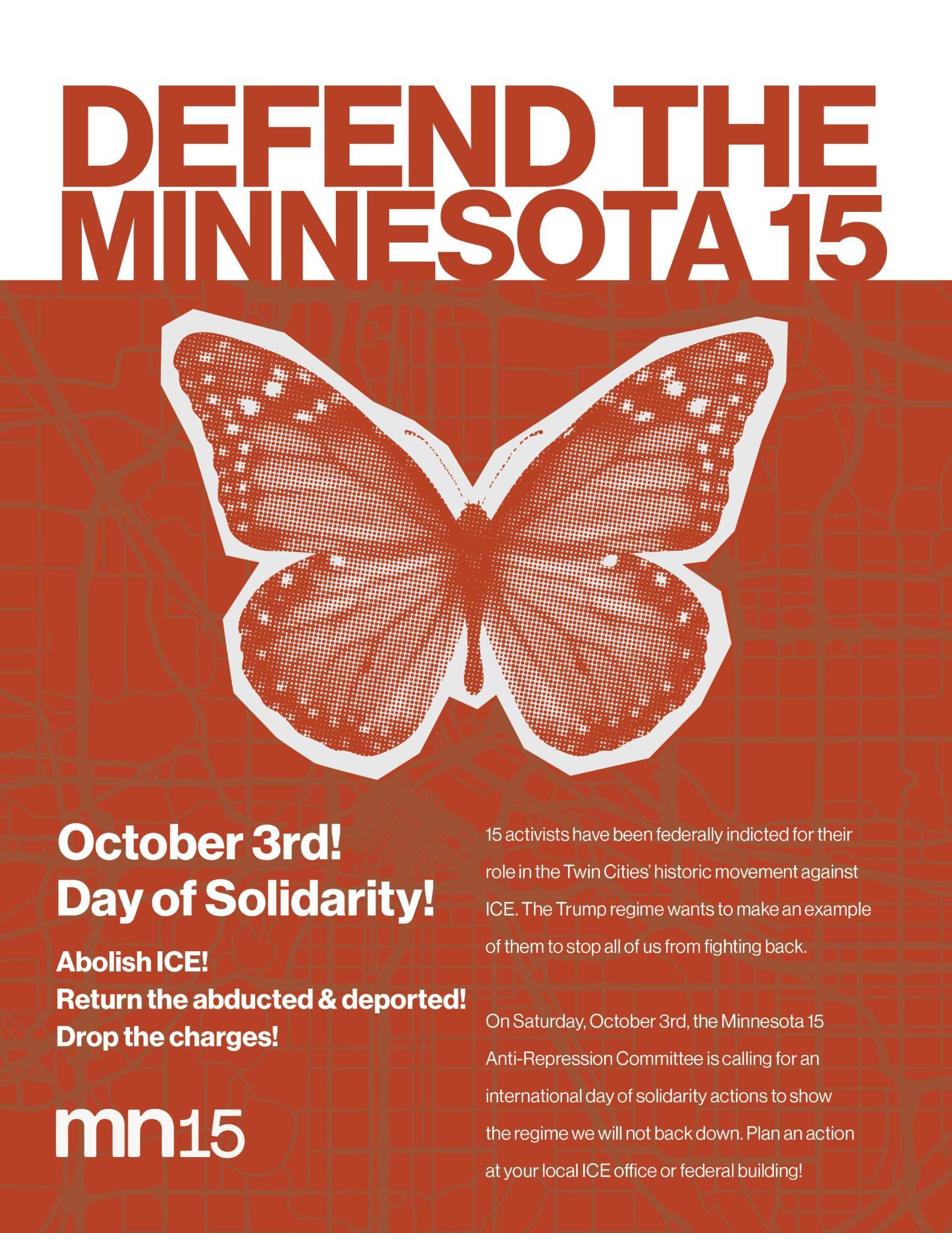
Out of the tens of thousands who participated in resisting Operation Metro Surge in Minnesota between December and February 2026, fifteen people have been federally charged for allegedly conspiring to resist the violence that ICE agents inflicted on their communities.
The Minnesota 15 Anti-Repression Committee is calling for a nationwide day of solidarity actions on Saturday, October 3 to express support for the defendants and all those targeted by ICE. Plan an action at your local ICE office or federal building!
In Minneapolis, on October 3, a labor-led march will traverse downtown to show solidarity with the defendants and to call out the federal government and their corporate enablers. Meet at Peavey Plaza, 1101 Nicollet Mall.
Vermont
From October 4-9, in Chittenden County, Vermont, people will host a week of mass action to end ICE surveillance, targeting, and separation. Everyone is invited!
Vermont is a national nerve center for ICE surveillance. Through the Law Enforcement Support Center and the National Criminal Analysis Targeting Center, both of which are located in Williston, Vermont, ICE collects tips on our immigrant neighbors, spies on civilian social media accounts, and builds lists of targets for kidnapping and deportation. Alongside a dozen other offices scattered around Chittenden County, these sites provide the bureaucratic backbone and surveillance infrastructure for ICE activity countrywide.
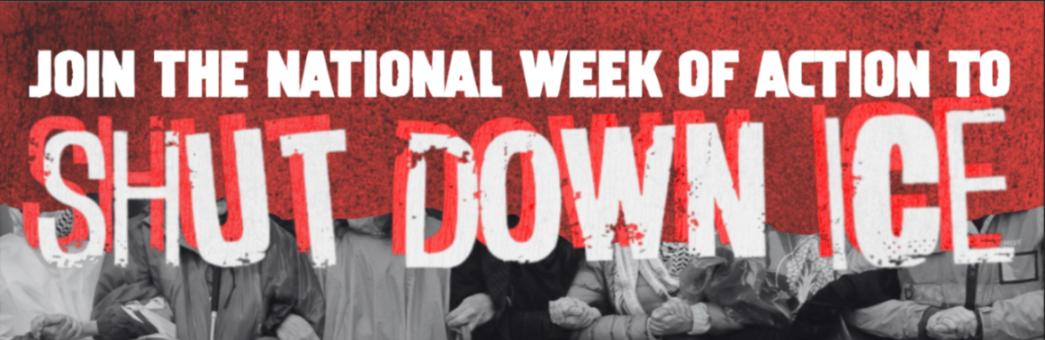
How to get involved:
- Travel to Vermont to join the week of action, where a variety of diverse and creative interventions will shut down ICE surveillance operations. You can learn more here.
-
Organize a solidarity action where you are. Organizers involved in the Shut Down ICE week of action have assembled a toolkit to help you plan and carry out your own actions locally. The toolkit provides tools and recommendations for:
- Understanding Vermont’s role in the detention and deportation machine
- Tools for planning actions and generating media coverage
- Templates for spreading the word through social media and physical fliers
- Resources to help with a call-in campaign
Arizona
Activists have been blocking the construction of the border wall in Lochiel since July 27. They are calling on people everywhere to join them.
Roots in the road, we feel it all
This wall is gonna fall
This wall is gonna fall
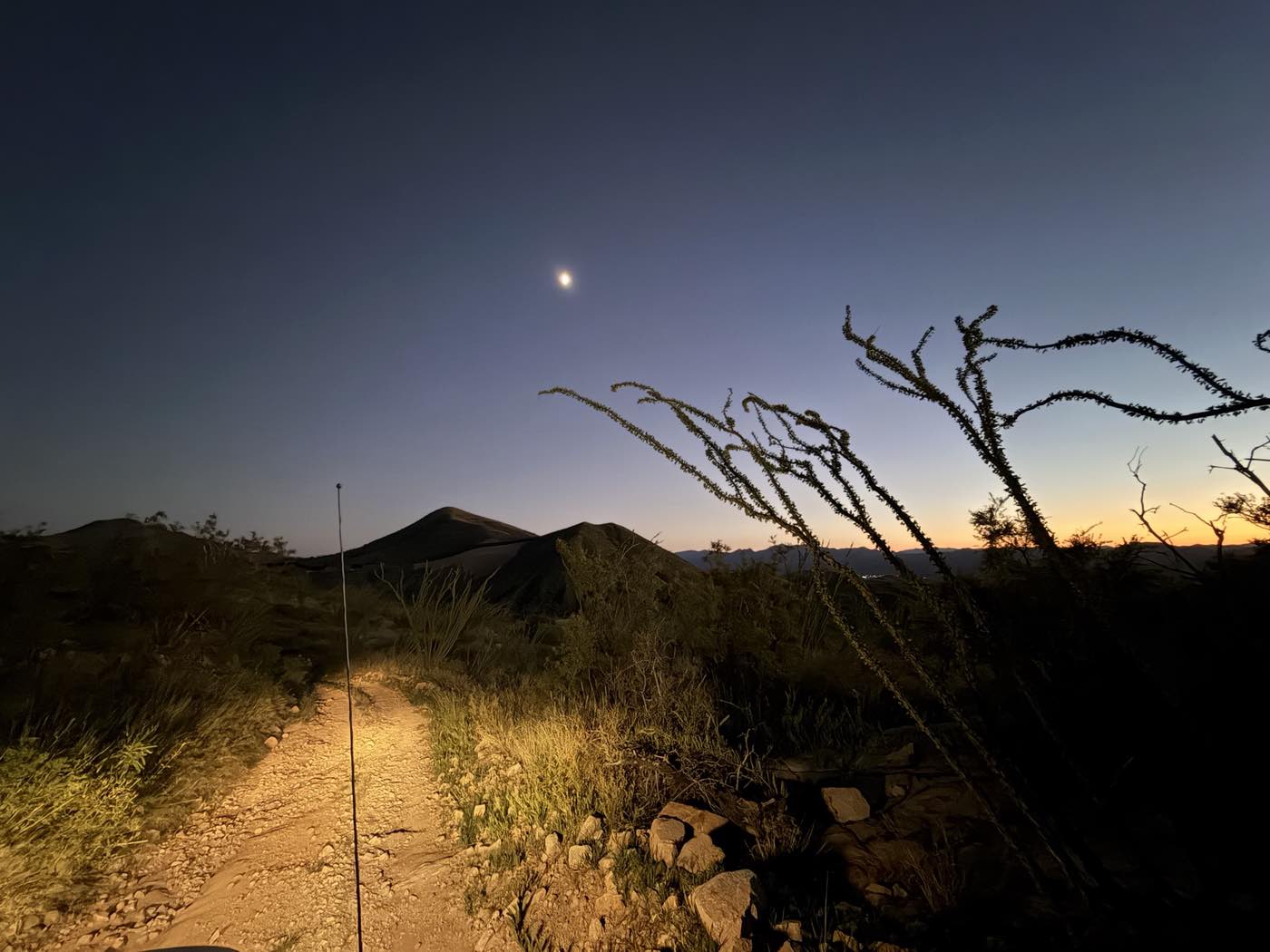
In Lochiel, Arizona, camp O:shad is named for the jaguar sacred to the O’odham, who have been in relationship with this valley and the lands surrounding it since time immemorial. The border cuts through this territory, historically shared with Yaqui and Apache as well. Migration is normal.
Right now, there is no wall here. The animals traverse the land unimpeded. We too move freely, defending this territory from desecration. After the old fence was removed, we halted the construction of the new double wall across a roughly 16-mile stretch of land.
Lochiel is one site of struggle along a 1200-mile contested border. We are acting in solidarity with land defenders at Quitobaquito Springs, Tada Mei, Big Bend, and beyond. From July 27 to September 23 marks 58 days that a tree-sit has defended an ancient cottonwood we call the Abuela Álamo, or Grandmother Tree. This tree stands directly in the way of the construction. The ground support camp protects and maintains this blockade. We live together, support each other, and scheme as to how to halt construction here and at other locations along this stretch of the border.
The front of struggle has expanded. Establishing a camp five miles west of the grandmother cottonwoods, comrades have twice halted the destruction of this wild landscape. Last week, without aid from other law enforcement, Border Patrol agents were forced to trek up a steep sandy slope on foot to assess the “threat” posed by land defenders casually standing near equipment. Gasping for breath, a BP officer lamented “Well, I can’t tell you to leave, I guess… this is national forest.” Impotent, our enemies abandoned their million-dollar equipment and shuffled back down the mountain. We took a nap, enjoying the cool shade of the discarded machines, the valley ringed green with mountains and mesquite.
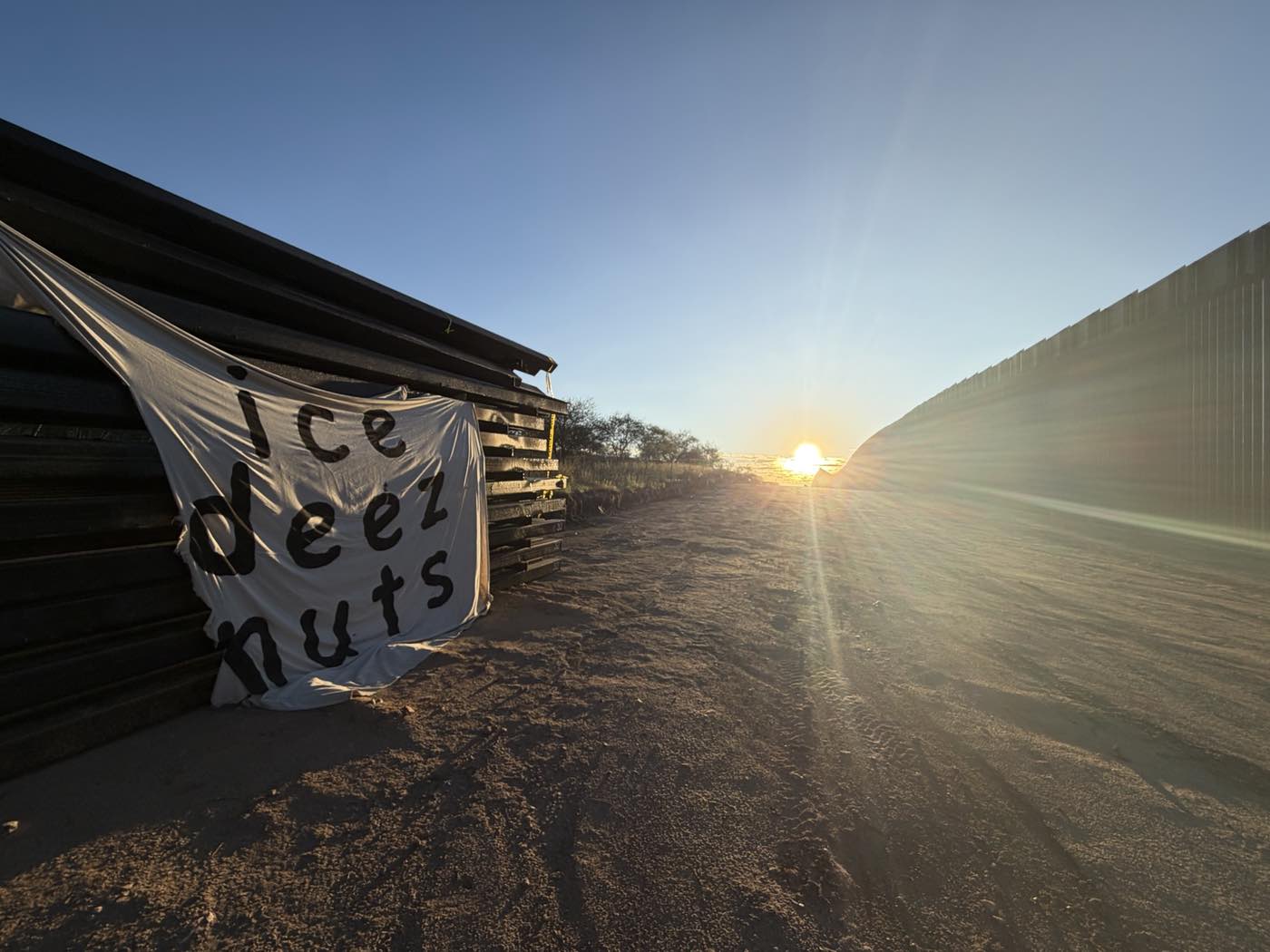
We want you to come to Lochiel and join us in blocking the construction of the double border wall. This is a great opportunity to learn and grow with others. If you’ve never done anything like this before, but feel compelled to fight, we need your energy and new perspectives. If you have experience in land defense and direct action, we will value your skills and appreciate your guidance.
We have a great deal of local support and the tactical situation is favorable. In Santa Cruz County, the sheriff doesn’t want to get involved. Despite their threats and intimidation, Border Patrol seems to have no legal right to intervene. We, like the jaguar, move unimpeded across the terrain. Small groups of people have disrupted construction efforts miles away from camp and we continue to do so at every opportunity. However, work is continuing elsewhere and we need to move quickly to intervene. This valley is wild, we are free. Things will not always be so comfortable.
We cannot anticipate how the state will proceed, but escalation is inevitable. It may be that the authorities are hesitant to repress us with the midterm elections approaching; for the moment, perhaps, they fear losing their hold on power, and lack the political will to force through the construction of this tremendously unpopular double wall. Alternatively, it could be that we haven’t yet done enough to rouse their ire. We have to assume that the construction company, Border Patrol, and the other forces behind this project are working to outmaneuver us. Whatever we attribute our luck thus far to, we know that only our actions can create a situation in which neither party will be able violently enforce its anti-immigrant agenda.
We need a great number of people to gather in Lochiel so that when the state becomes confrontational, we are strong enough to continue defending this land. Come immediately and stay as long as you can. Bring your comrades and the dreams you’ve been fostering together.
On October 4, we will host a day of action in Lochiel in tandem with other struggles against the border, to be followed by a week of action later in October. Ask yourself what you are willing to do, then come here and do it. Now is the time.
How to get involved:
- Reach out, start making travel plans. Below, we list ways to get in touch. Let us know what you are bringing and what you can offer. We can answer questions and will support your journey as best we can.
- Come to Lochiel. Come now, stay for a month. Come for a few weeks in October or November. Move here with open-ended plans. You can help with reproducing daily camp life, help to build and maintain camp infrastructure, learn to climb, disrupt construction creatively, ride a bike down the border easement, write a song, pray or hold ceremony in your own way, talk construction workers into taking a break for the day. The vibes are great, the view is spectacular.
- On September 26, there is a public organizing meeting in Tucson at 6 pm at Catalina Park.
- On October 4, join us for a day of action in Lochiel in concert with the kick-ff of the week of action against ICE in Vermont.
- Later in the month, there will be a week of action against the border.
- Follow @tierralibre and @rallyforthevalley on instagram for updates.
- Message @loki.325 on signal for general information.
- Email camposhad@proton.me with specific inquiries.
To support us without leaving home, send banners, love letters, and supplies to:
Alliance for Global Justice
c/o Camp O:shad
225 E 26th St., unit 1
Tucson, AZ 85713
United States
You can provide for supplies here, legal funds here, and general funds here.
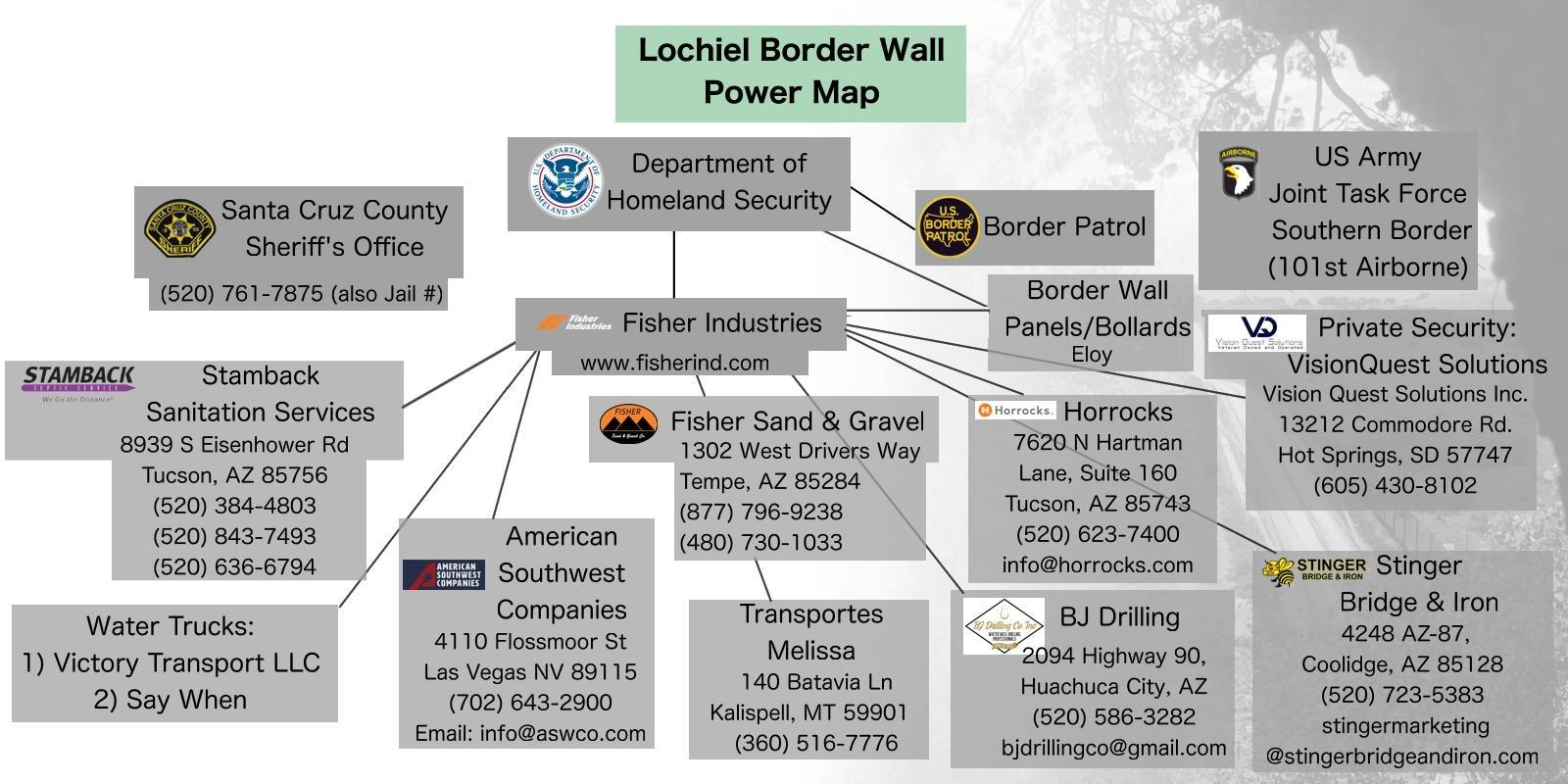
To exert pressure on those who are responsible for supporting the construction, look into the work of:
- Stamback Sanitation Servies in Tucson, Arizona
- Fisher Industries
- Fisher Sand & Gravel in Tempe, Arizona
- American Southwest Companies in Las Vegas, Nevada
- BJ Drilling in Huachuca City, Arizona
- Stinger Bridge & Iron in Coolidge, Arizona
-
VisionQuest Solutions Private Security in Hot Springs, South Dakota
Austin, Texas
Early on the afternoon of Sunday, September 20, in Austin, Texas, Wilber Rafael Garcés Pérez was driving for DoorDash when an ICE agent shot him multiple times. 28-year-old Garcés was inside his car. Two bullets struck him in the back, near his spinal column. Following the shooting, ICE called for backup from local law enforcement agencies; shortly thereafter, Austin Police Department (APD) and the State Troopers, a division of the Texas Department of Public Safety (DPS), arrived to the scene. In the immediate aftermath, APD was seen removing Garcés from his car and placing him in handcuffs, notwithstanding the two exposed bullet wounds on his back. In footage online, community members are seen walking onto the median to confront the federal officers directly. APD later made a half-hearted attempt to place caution tape around a vast space under the 183 freeway.
Around 1 pm, Garcés was taken to the hospital while the APD and DPS remained on scene and the federal agents dispersed. The fact that there were so few of them indicates the degree to which federal forces rely on local and state police. They did not come back with reinforcements. They rely both politically and militarily on local cops: they compelled them to be the face of the shooting, and in any case, they do not have enough forces in the area to mobilize their own defense when things get hectic.
By 3 pm, more than 200 people had assembled where the shooting took place. Community members gathered on one side of the street, while DPS and APD stood side by side in the median. While the busy frontage road separated the crowd from the police, protesters became emboldened by their growing collective power and began to enter the street to close the space between them. As the heavy police presence did not deter the crowd, the police resorted to shooting pepper balls indiscriminately and even macing children to keep them on the sidewalk.
By 4 pm, the crowd, now numbering nearly 300, began advancing on the police, pushing them back across the median and across the highway to the other side of the road. Demonstrators availed themselves of whatever resources were at hand in the underpass, using construction columns as makeshift barricades to disguise their identities while launching rocks and other projectiles in order to push the police back further. In spite of APD’s pepper balls and crowd control measures, the crowd continued to advance, hurling rocks at police and cruisers, sometimes from point-blank range, showing an astonishing bravery and appetite for confrontation.
By 5 pm, the determined crowd had forced the police to flee the scene altogether. A rowdy and energic spirit filled the space. The demonstrators celebrated their victory by erecting a barricade on the busy frontage road and setting up a vigil in the street at the site where the ICE agent shot Garcés.
Over the next five hours, community members from the surrounding neighborhoods filled the liberated space alongside those who heard the call to confrontation in other parts of the city. Some activists hosted a speakout, amplifying the voices of locals impacted by police and ICE violence. Later, dirtbike and car kids turned out, and tire squeals and burnouts echoed under the bridge lit by fireworks. One lone DPS cruiser approached the celebration; people quickly drove it away with another barrage of rocks and water bottles. For some, this scene was reminiscent of the Rundberg Rebellion, a similarly festive appropriation of space from the police that took place following the tragedy of an ICE detention in North Austin nearly a decade ago.
At close to 10 pm, a phalanx of APD and DPS troopers returned to repress the remaining crowd in order to prevent a longer and more resolute takeover of the intersection. APD made several violent arrests. The next morning, community organizers held a jail support vigil for those captured.
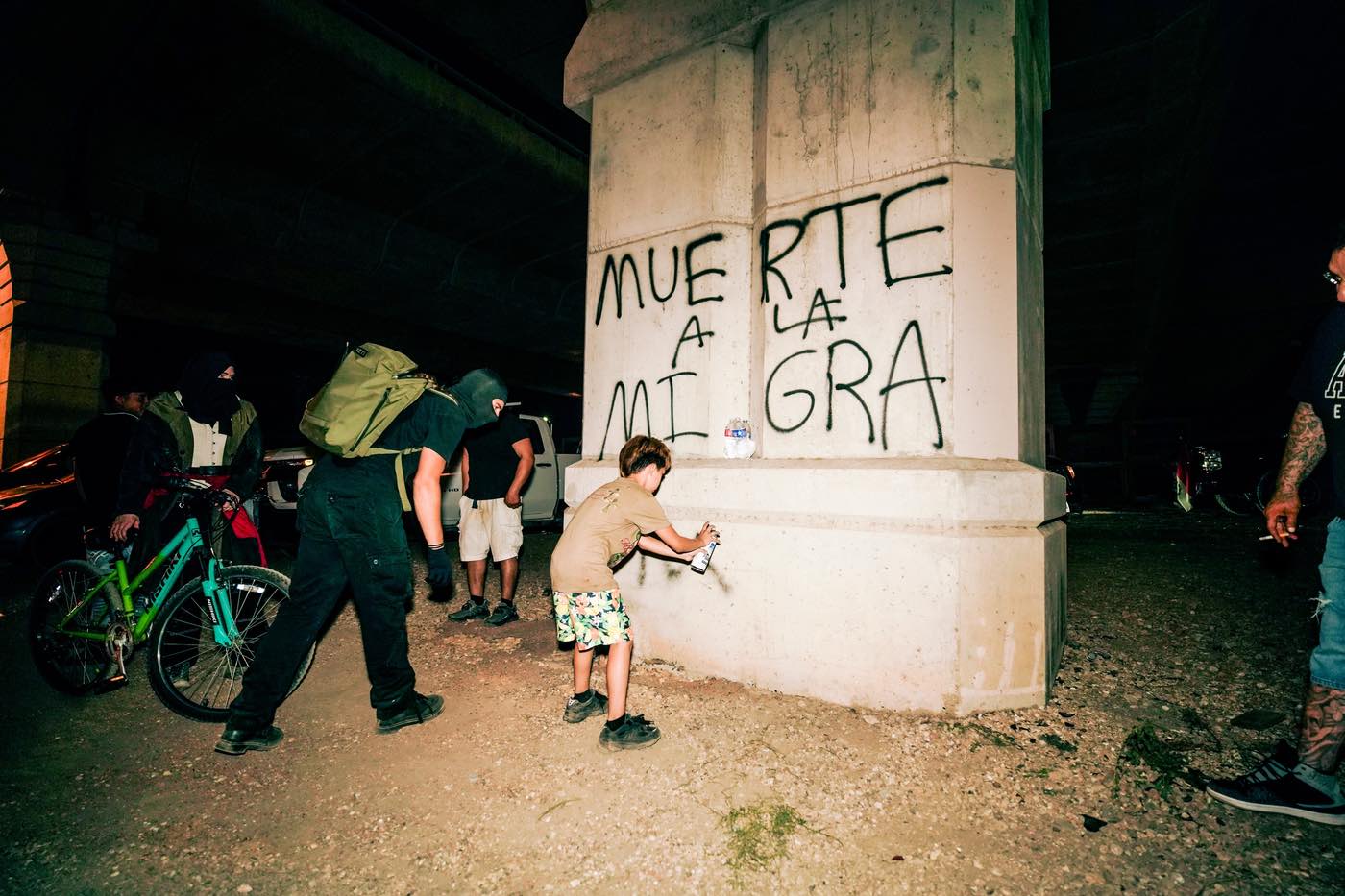
Photograph by Scamlikely.
It is essential to recognize that city officials are waging a counterinsurgency operation in the wake of Sunday’s events.
Divisions between city, state, and federal forces are real, though we must understand their basic unity if we wish to further separate them. Whereas Texas DPS and ICE make it their business to work together hand in glove, APD and the City of Austin need to uphold the appearance that they are separate. For the same reason, they wish to be seen as non-antagonistic to movements against ICE terror. The call for an “independent APD-led investigation” clearly echoes the now-familiar strategy of APD representing itself as reluctantly dragged into state and federal business, hands tied despite their “good intentions.” They present themselves as participating only reluctantly in immigration enforcement, just as they claim that they are forced to pepper-ball aggressive protesters on account of the actions of the protesters themselves.
Though city officials are now desperate to spin it otherwise, Austin Police were present at the assault on Garcés from the jump. APD quickly took on the role of detaining and cuffing Garcés, holding him captive with a bullet lodged in his back, and they remained involved until the last protesters were arrested or scattered. Everyone from the police chief to progressive council members aims to place the blame for the shooting and detention on federal forces, channeling towards them the widespread hatred for the system that they themselves also uphold.
Wherever we can, we should compete on the level of narrative. But in order to do so, we must continue to force APD and city officials into material situations, like the conflict on Sunday, that reveal the falsity of their rhetorical operations.
The events of Sunday, September 20 demonstrated how combative actions can bring the narratives of local police and authorities into question. Each time APD is forced to repress those combatting ICE terror, it damages the mirage of independence that they seek to cultivate. Every time that ICE attacks someone in our community, we must take material action to turn it into a crisis for APD. Any fight against deportations must be directed specifically at the local police, for in reality, their share of responsibility far exceeds that of ICE.
The initial wave of local rapid response organizing, modeled on the Minneapolis example, foundered to some extent because the participants could not overcome the limit represented by the false idea that police are not responsible for deportations. Though much remains to be done, Sunday evening offered a glimmer of hope.
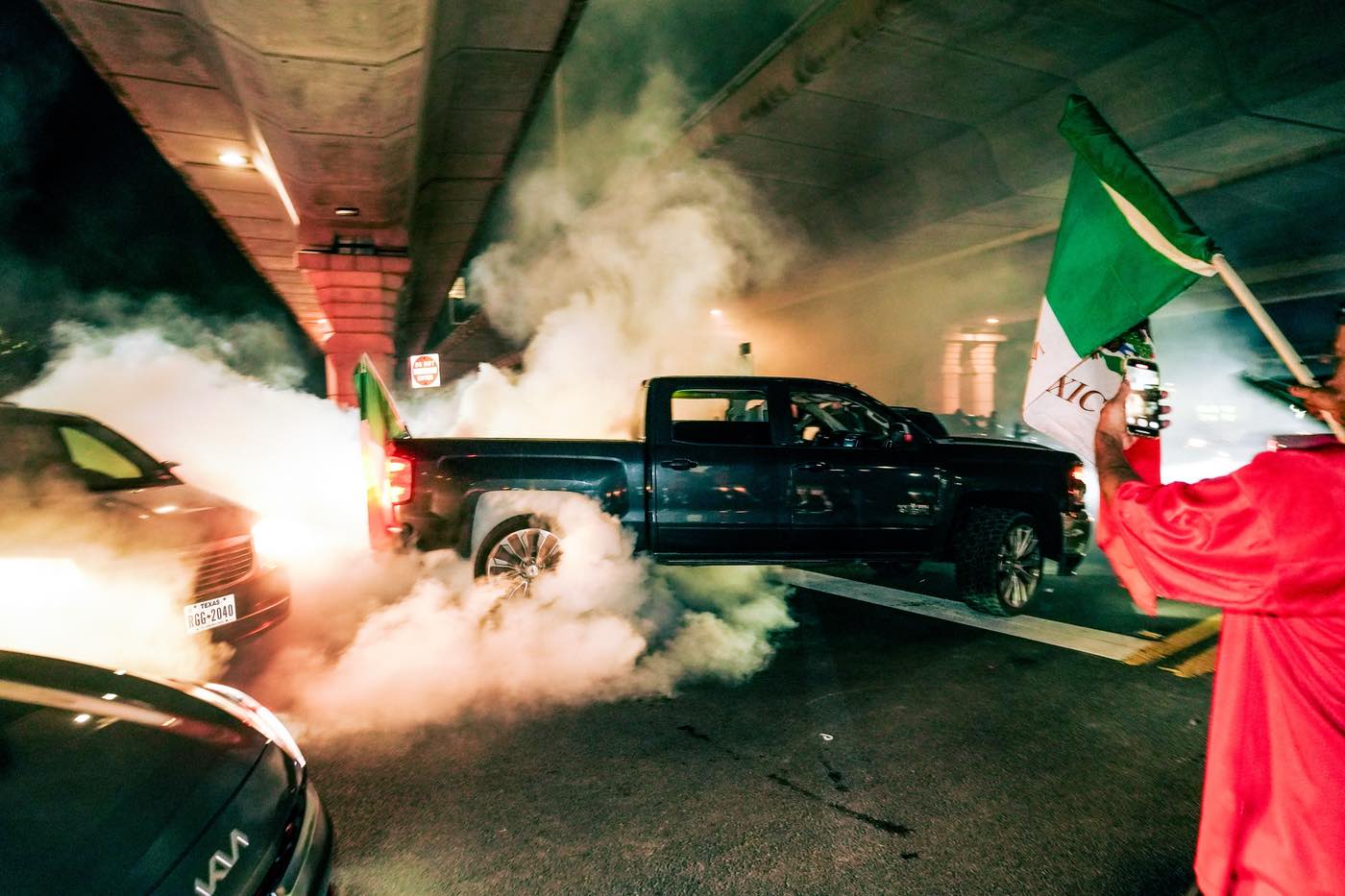
Photograph by Scamlikely.
When police arrest a person without citizenship for a crime, no matter how serious or innocuous the offense,they take the arrestee to the Travis County Jail for booking. As part of the booking process, the law enforcement agencies share all information with ICE, who runs the person’s name to see if they can flag the arrestee for immigration detention. If ICE determines that the answer is yes, the agency requests that Travis County Jail issue an “ICE hold,” or “ICE detainer,” a legal mechanism that permits Travis County to continue to detain a person for up to 48 hours after the individual would have otherwise been released—even if they have paid their bond, had their charges dropped, or their case resolved—so that ICE can come to arrest the person and transport them to immigration custody.
Historically, the federal government has relied heavily on local jails and police departments to participate in the mass deportation agenda by enabling ICE to arrest people who are already in police custody. Across the United States, in fact, ICE predominately makes arrests under this “Criminal Alien Program,” or CAP. First developed as a program for local jails and prisons to run checks in order to identify non-citizens convicted of “serious crimes,” today, CAP has become a mainstay of immigration enforcement and the primary mechanism through which ICE removes people from the country. Between two-thirds and three-quarters of all individuals deported from the U.S. have been processed through CAP.
More often than not, an individual enters ICE custody as a consequence of ending up in their local jail. Austin is no exception. The fact that we do not see large numbers of federal agents in Austin is due to the fact that local police are already continuously assisting ICE in its daily operations across the state. In Texas, it is local law enforcement agencies like APD that enable ICE to make so many arrests. Texas is the state with the greatest number of ICE arrests bar none, consistently leading in both absolute numbers and arrest rates.
Notwithstanding Austin’s “progressive” administration and “immigration friendly” veneer, this city plays an outsized role in feeding the ongoing abduction, incarceration, and deportation crisis. The numbers speak for themselves: Between September 2023 and October 2025, in the San Antonio Area of Responsibility (AOR), the immigration enforcement region in which Travis County (Austin) is located, 14,034 detainers were requested by ICE across a total of 61 total facilities. These facilities range from pre-trial detention facilities to state and federal prisons; the overwhelming majority were county jails. Of the 61 facilities, Travis and Bexar Counties led the region in ICE detainers, totaling 47% of all ICE hold requests made by the agency in the San Antonio Area of Responsibility.
During the same period in Travis County, ICE requested 3388 detainers, an average of four or five ICE detainers per day. Of those, at least 2433 detainers resulted in immigration detention, making for about 3.3 ICE arrests per day in the county. In San Antonio’s Bexar County, ICE requested a total of 3270 detainers in the same two-year period. Of those, at minimum, 2162 detainers resulted in people being turned over to ICE custody. When we adjust for population, we see that Travis County issued detainers that resulted in a person going to immigration detention at a significantly higher rate (248 per 100,000 residents) than San Antonio (154 per 100,000), representing a 62% higher per-capita rate of fulfilled ICE detainers.
While DPS and other agencies certainly play their role in this scheme, we must not forget APD, the agency whose arrests account for the vast majority of those booked into and detained at Travis County Jail annually—generally 60-65% of all yearly bookings. While there are no statistics publicly available that tell the story of how many APD arrests result in ICE detainers, it is clear that APD accounts for the lion’s share of arrests in the county. In the first five months of the second Trump administration, Travis County saw a 50% increase in ICE detainers, accounting for 15-20% of the total jail population. This increase isn’t simply explainable by the rise in the jail population, as the number of ICE holds appears to be rising more rapidly than the jail population itself.
No amount of hand waving from APD’s chief or the city’s progressive talking heads should conceal this. The press conference featuring Mayor Kirk Watson and Police Chief Lisa Davis shows how desperate the government of Austin is to launder its reputation. Looking at the ICE holds placed on individuals arrested during routine run-ins with APD, DPS, or park rangers and held in Travis County Jail, we can see that compared with many neighboring counties where the local police and sheriffs feel no need to make a show of their good intentions, Austin, per capita, assists in deportations at an exceptionally high rate.
With or without “total collaboration,” with or without an ICE “surge,” Austin is already unusually efficient at abducting and deporting local residents, and its primary method is the daily operations of this city’s police.
As many have long understood, all movements for a better world must confront the police. We must spread an awareness of the central role that local cops play in the deportation machine. We do not believe that events like the response to the shooting of Wilber Rafael Garcés Pérez on September 20 will necessarily give rise to serious uprisings or overcome all the limitations that the movement against ICE confronts here, but they offer opportunities to spell out the roles that our enemies play and to clarify our own responsibilities. This is a chance for us to join forces and build a shared language of struggle in order that one day we may abolish ICE, the police, and the state they exist to uphold.
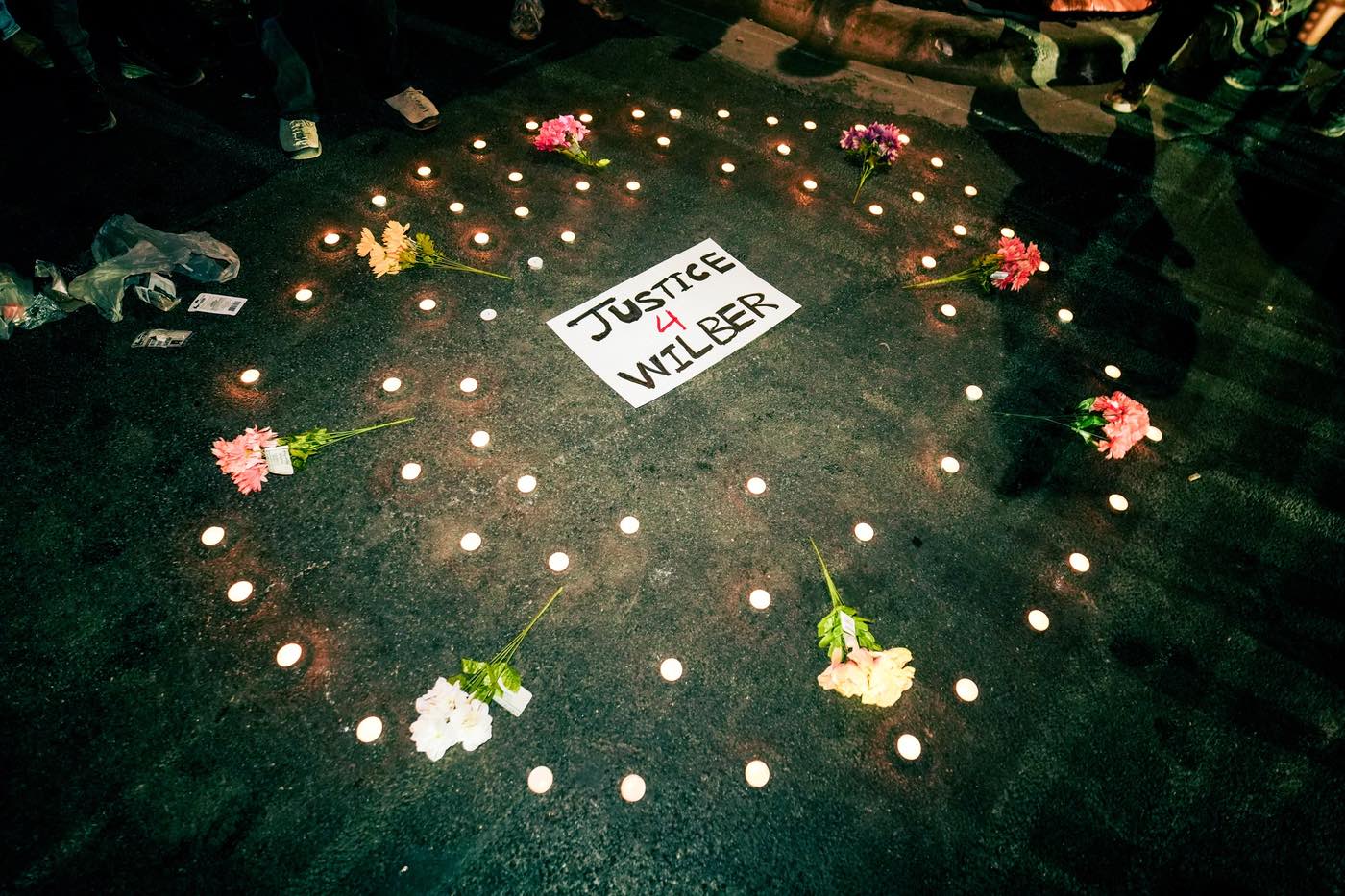
Photograph by Scamlikely.
Frederick, Maryland
Starting on September 3, a large number of federal agents arrived in Frederick, Maryland to terrorize locals, who quickly mobilized to resist. Widely circulated footage showed ICE agents driving onto a sidewalk to menace locals with a vehicle and assaulting people in order to gain access to a local house. Officers entered the house but left without making arrests.
To gain more insight into the events, we conducted a brief interview with DC Media Group.
Footage from the resistance to ICE in Frederick, Maryland.
What caused people to mobilize against ICE in Frederick, Maryland?
Initially, ICE carried out a random traffic stop, stopping a person known to live in the neighborhood. The person had broken no law but was pulled over and asked to get out of their vehicle. They refused to do so. When ICE threatened them, they somehow managed to escape and run across a busy interstate. Running between speeding cars was extremely dangerous, but their rash decision shows how anxious at-risk people have become regarding the ICE removal program.
How did people mobilize? Was it just anti-ICE activists, or community members, or both?
Both anti-ICE activists and community members mobilized concurrently as ICE began staking out the neighborhood and word spread among the neighborhood residents about what happened. These discussions gave rise to an attitude of Oh fuck no, not in our neighborhood, not to my neighbors. Being a close-knit community helped awareness spread fast.
How did the siege play out?
ICE staked out bus stops and parked in unmarked vehicles of certain makes and models. They wore masks. Imagine if an average Joe parked near children waiting at bus stops, wearing a mask like that. Parents would be on it in a second!
The neighbors organized themselves and set up shifts in the neighborhood to monitor ICE. They watched ICE at the bus stops and escorted children safely home.
Can you talk about people sharing food, supplies, and engaging in mutual aid during the siege?
Over the past two years, an entire network has been built to support at-risk communities. It includes ICE observation groups, food distribution, records keeping, incidents documentation, other resource support, outreach, transportation, and more. It is a volunteer network, taking its roots from the mutual aid systems developed in the 1960s by Huey Newton and Bobby Seale at the People’s Kitchen and the Oakland Community School. The collective was inspired by the actions of Harriet Tubman and the Underground Railroad—the idea that We protect us, a chant often heard during Black Lives Matter protests. These ideas are not new—they are borrowed and essentially unchanged. However, they are enhanced by modern methods of communication.
How did people organize in shifts to keep watch during the siege?
Grandmothers and moms sat on lawns holding signs. They set up patrols and parked near ICE vehicles keeping watch. When grandmothers get pissed at you, it means that you’re going to lose. That must have had a psychological impact on ICE agents—at least, if there are any who are capable of empathy at all.
How did people outside of activist groups and in direct opposition to ICE respond to these events?
As word spread through the community, other groups got involved. In the background, there was a huge amount of activity. This had the knock-on effect of giving others the courage to join the line of resistance. There was a risk of injury and they understood that. Only those with knowledge, awareness, and training were supposed to join the line at the house, but some others joined anyway. There was a risk of a much more serious incident occurring.
Talk about the violence that ICE carried out against residents who locked arms in front of the house.
The video shows how out of control and untrained the ICE agents were. First, they attempted to run down neighbors and supporters on a sidewalk. The neighbors were unarmed and standing still, breaking no laws. Then ICE agents wearing masks beat people and slammed them into the ground. Many neighbors were traumatized and will require treatment, both physically and mentally.
These neighbors showed the power of the people. People with little equipment and support organized against a violent gang of armed agents. They fought back and came out winning. We live in an unconstrained oppressive society; it has always been this way for certain minority groups. But for the first time, that sort of oppression has spilled into predominantly white neighborhoods. People must volunteer and link to mutual aid channels or form groups by speaking to others and vetting newcomers.
ICE has built a massive infrastructure of operations including camps, personnel, vehicles, equipment, and surveillance. ICE isn’t going to stop when it has run through its list of immigrants. It will go after political opponents, the way that the Brownshirts and the Gestapo did.
Volunteering can be as easy as giving time and effort in the background or donating food and supplies. Each person has limitations on what they can do. But each volunteer can contribute to making a big impact.
How can people follow your work and DC Media Group?
DC Media Group is a 15-year-running independent media collective of volunteers. There are costs associated with running the site and paying for data, time covering events, writing, photography, video, and transportation costs. We’re not using AI to generate content and we do not accept corporate sponsorship. We don’t request donations, but we will graciously accept them to defray our out-of-pocket costs. Anyone can help by following us, sharing links, and supporting any independent media channel. We always encourage supporting independent media because the billionaire class owns most of legacy media now and is not covering stories like the ICE attacks on neighborhoods, or at least, not covering them from the perspective of residents.
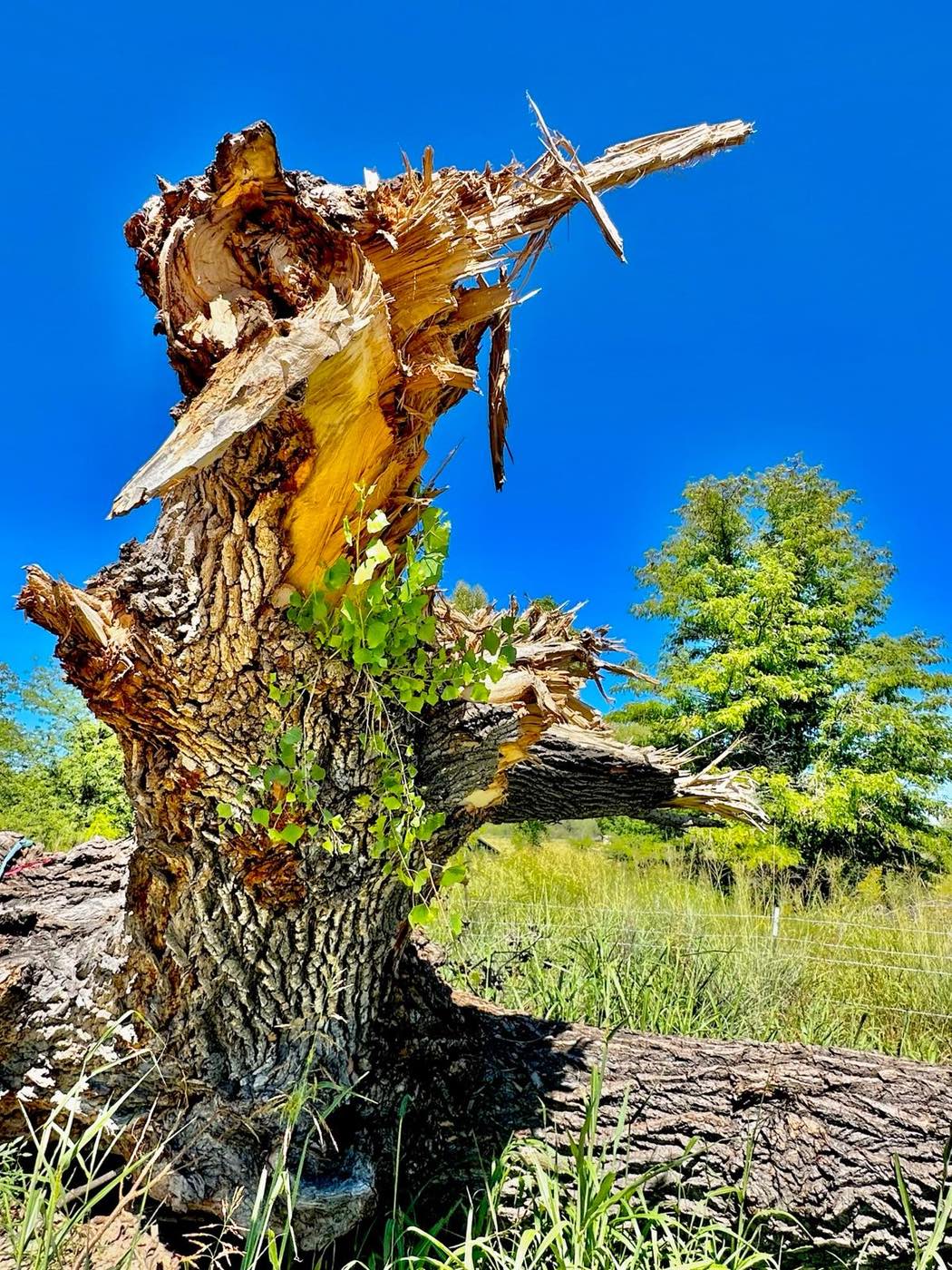
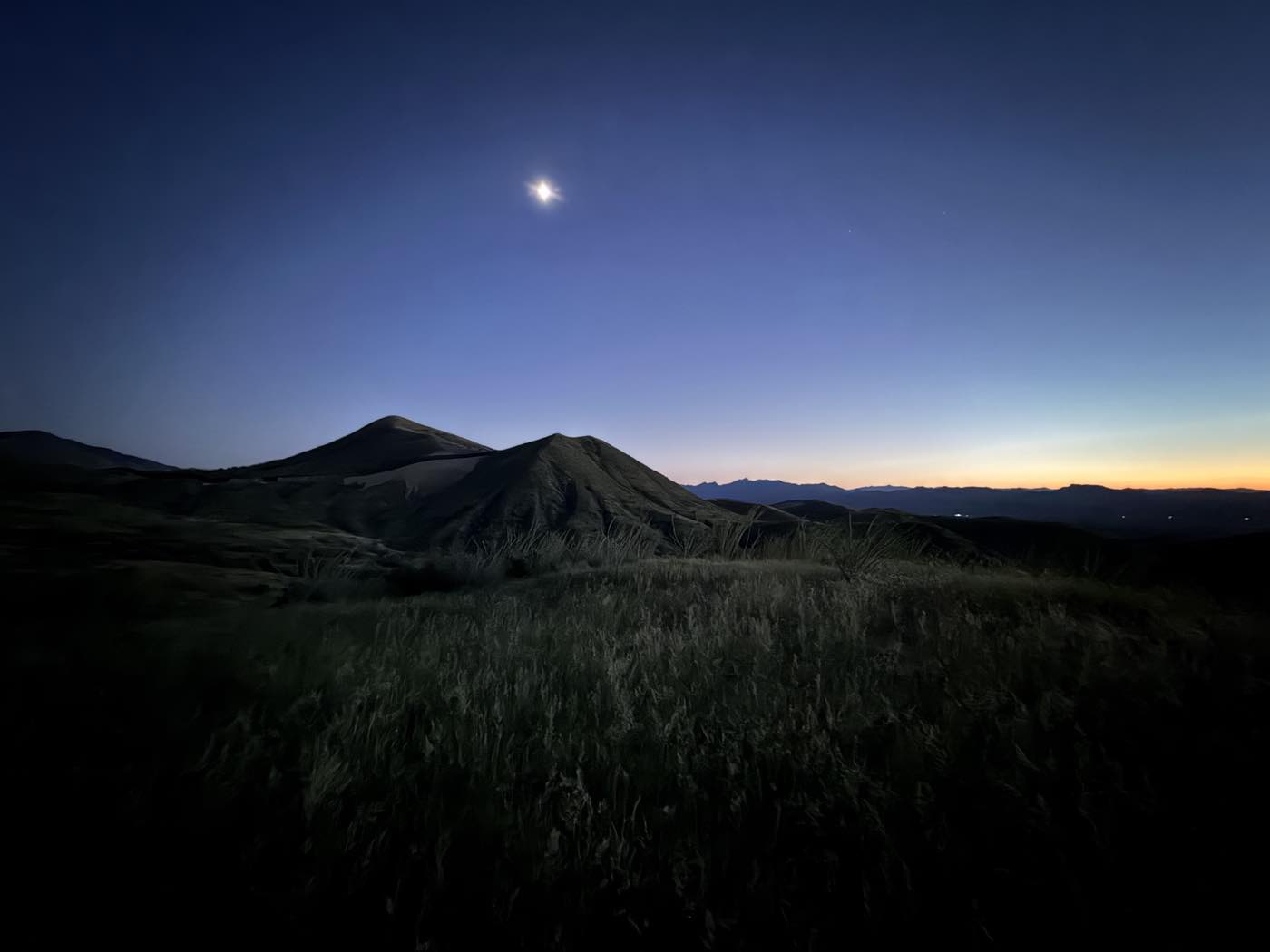
One of the felled grandmother cottonwoods near Lochiel, Arizona. If we can halt the assault on the land and people, we will see new growth.


