![[Aggregator] Downloaded image for imported item #270355](https://batshitcrazy.com/wp-content/uploads/2026/07/header-1068x601.jpg "[Aggregator] Downloaded image for imported item #270355")
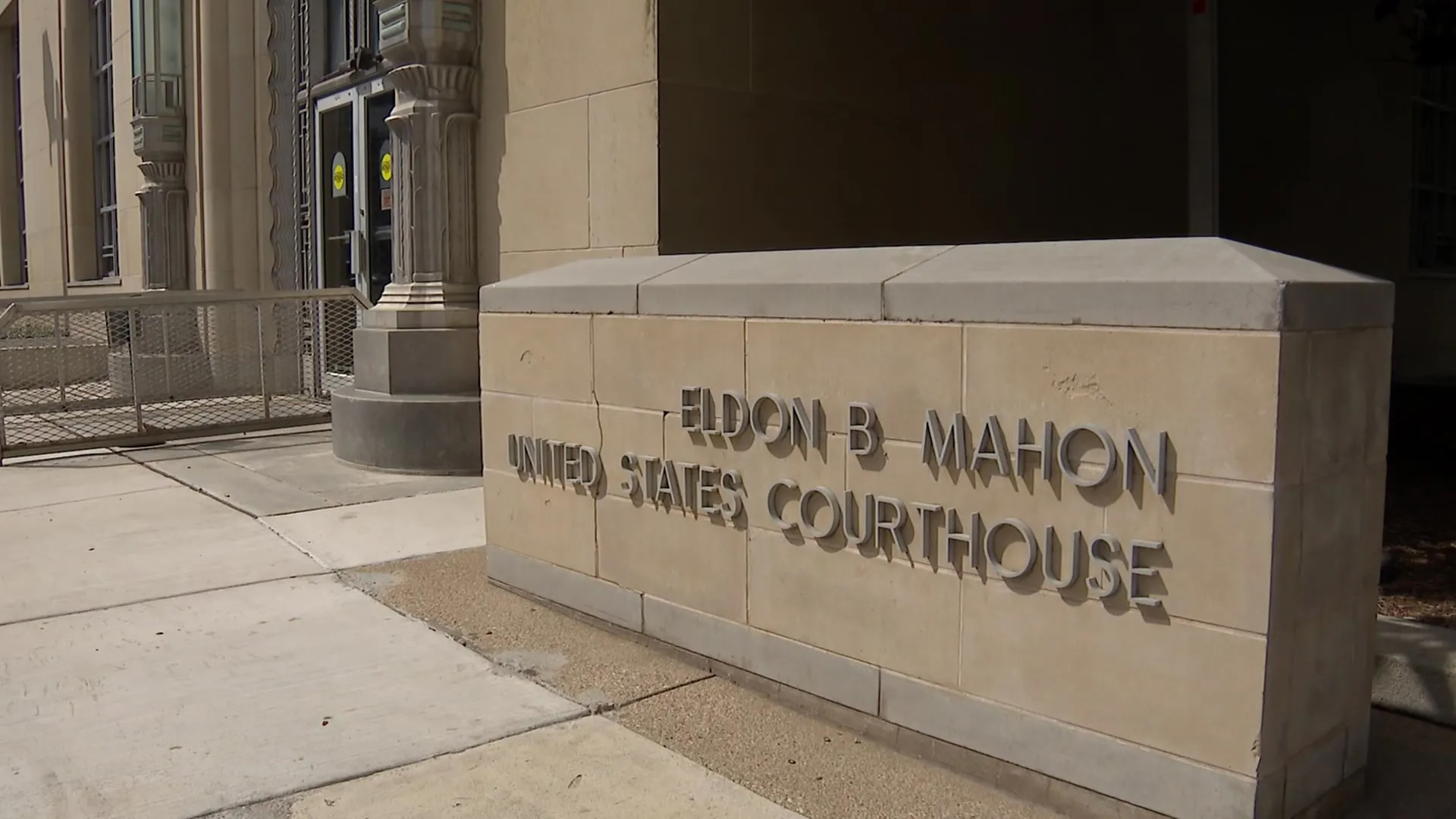
On July 4, 2025, roughly a dozen people participated in a demonstration at the Prairieland Detention Center, a facility serving Immigration and Customs Enforcement. At the conclusion of the demonstration, a participant named Benjamin Song saw a police officer aim a gun at a participant named Nathan Baumann and fired warning shots at the ground in response. Since then, police have arrested 22 people on widely publicized conspiracy and terrorism charges, subjecting many of them to long-term solitary confinement and other pressure tactics. Eight defendants who chose not to cooperate with the prosecution have been found guilty and sentenced to between 30 and 100 years in prison each, with one of them receiving a 30-year sentence simply for having moved a box of zines.
The Prairieland prosecution is a flagship effort intended to criminalize opposition to fascism per se in line with the Trump administration’s National Security Presidential Memorandum-7. The prosecution’s approach hinges on the idea that the defendants constitute an “antifa cell,” despite many of them not knowing each other at all.
This is not unprecedented. On the contrary, it is a strategy of repression that is familiar elsewhere in the world, under even more authoritarian regimes. In Russia, for example, it has become common for officers from the Federal Security Service (FSB), the successor to the KGB, to use electrical shock torture to attempt to coerce arrestees suspected of anarchism into signing false confessions affirming the existence of invented conspiracies.
The playbook is to fabricate an association, then pressure defendants to plead guilty, manufacturing evidence of the supposed conspiracy. In Russia, they do this with cattle prods; in the Prairieland case, they are attempting to accomplish the same thing via less flagrant means, including solitary confinement and threats.
In the year since the demonstration at the Prairieland facility, federal agents have tried to expand on this precedent. Prosecutors continue to indict new defendants in the Prairieland case. In May 2026, three people in Spokane, Washington were convicted on felony conspiracy charges for protesting against Immigration and Customs Enforcement activity. On June 16, federal agents carried out aggressive house raids across the Twin Cities, arresting twelve people and indicting fifteen on federal conspiracy charges.
What is possible in Texas will not necessarily work in Minnesota. In parts of Texas, far-right and outright fascist state officials control much of the judicial bureaucracy and police, and have the support of much of the population; in Minnesota and other parts of the country, ICE and other elements of the Trump administration are so unpopular that even grand juries, long known as a tool that prosecutors can use for any purpose, sometimes refuse to indict arrestees. The local culture that prevails within the judicial infrastructure of different districts, the amount of leverage that local social movements exert, and the perspectives of the available jury pool all make a significant difference in the outcome of cases like these.
The outcome of the first Prairieland trial should not intimidate us out of organizing and taking action; rather, it shows how high the stakes are. Both direct support for the defendants and general efforts to organize, popularize, and legitimize resistance can play a role in blocking federal efforts to normalize the Prairieland model. Even if the appeals courts show themselves to be just as corrupt as the courts that have convicted and sentenced Prairieland defendants, if we build a strong enough movement, whoever succeeds Donald Trump in power could be compelled to commute their sentences.
If we withdraw from organizing, if we shrink from resistance, this will embolden the Trump administration and its supporters and they will intensify their attacks. Rather than permitting them to frighten us out of trusting each other, we must build deep personal ties and widespread community support in order to endure campaigns of repression. We can win this fight.
What follows is a statement by Fire Ant Movement Defense.

The Trial
On June 23, witnesses across the country watched in horror as the non-cooperating defendants in the Prairieland trial were given staggering sentences in the most blatant case of political persecution in a generation. Like the Haymarket trial, the Red Scare, and the repression of the Black Panther Party before it, the Prairieland case has come to define a new era of state terror intended to crush dissent.
It is critical to understand the conditions under which this trial took place. The defendants were humiliated, denied medical care, and repeatedly tortured by state officials throughout the duration of their custody. They were wheeled into court rooms shackled to chairs, forced to clean human feces off of cell walls, subjected to vile human rights offenses that reflect the complete immorality of the American judicial system. The point of these violations was both to punish and to coerce, in hopes that the defendants would turn on one another and abandon their values—the very existence of which this trial was designed to condemn. The majority of the defendants resisted these efforts, demonstrating incredible resilience in the face of overwhelming violence. However, others chose to forsake their values, reject their communities, and betray their comrades in acts of cowardly self-preservation. Without these cooperators, it is entirely possible that the Prairieland trial would have ended with almost all of the defendants winning their freedom.
The Defendants
Much of the state cooperation in the Prairieland trial was manufactured through torture and motivated by fear. It manifested in different forms, occurred in different degrees, and, like all matters of political importance, resists simple moral categorization. Of the nineteen defendants facing federal charges, five of them—Seth Sikes, John Thomas, Nathan Baumann, Lynette Sharp, and Susan Kent—took the stand at trial and condemned others to years in prison for their own benefit. Two additional defendants—Joy Gibson and Rebecca Morgan—took plea agreements. While these were non-cooperating pleas, the text of the deals affirmed the existence of a fictional “North Texas Antifa Cell,” which some in the movement have characterized as potentially damaging to other defendants. One other defendant, Meagan Morris, initially gave hours of testimony to federal agents, before rejecting cooperation, refusing a plea agreement, and standing trial with her comrades.
All of these cases are materially different from each other. Taking the stand in a courtroom is not the same thing as giving an interview immediately after arrest; full-fledged cooperation is not the same as taking a plea deal that affirms the state’s fabricated narrative. We reject simplistic generalizations that frame all mistakes as unforgivable, rendering it impossible to create an off-ramp for those who have previously cooperated with the state to change course, make amends, and restore their commitment to struggle.
Meagan Morris
We believe that Meagan Morris made an indefensible choice in giving hours of testimony to federal agents. By corroborating John Thomas’s testimony, she contributed to the arrests of Rebecca Morgan, Benjamin Song, and Autumn Hill. After that, she ceased all cooperation, refusing further interviews. She did not take a plea deal. She did not take the stand against her codefendants.
Many people will demand that she pay for her choice. We ask them to consider the ways in which she is already paying it. Despite her initial cooperation, the state was happy to punish her alongside the non-cooperating defendants after she chose to change course. For months, she has faced harassment, starvation, and humiliation like the other defendants. Other cooperators who continued betraying their values received sentences as short as 22 months—but she, rediscovering her courage, rejected that possibility. This does not erase what she did. The depth of her betrayal will be measured by the days, years, or decades that those who once called her a comrade spend in cages. Additionally, the end of Morris’s sentence will mark the beginning of another painful and complicated period when she will have to reckon with what accountability her community will demand for her choices.
Morris has made the strongest course correction towards revolutionary solidarity that is possible in her position. Her refusal to cooperate further landed her a fifty-year sentence. If we believe that remorse, redemption, and renewal are possible, then Morris has committed herself to seeking them. If we do not, then we must ask ourselves what we can offer defendants who have erred but have yet to decide whether to continue to assist the state. If we cannot offer those who have begun to cooperate any incentive to stop doing so, that all but ensures that once someone starts cooperating, they will become a permanent addition to the state’s arsenal against us.
There are lines that, once crossed, render return impossible. Baumann, Thomas, Sikes, Sharp, and Kent chose their side long ago. There are revolutionary contexts in which totalizing zero-tolerance policies are necessary. But at this moment, thousands of inexperienced new participants are flooding into the fight for liberation. We probably won’t be able to educate all of them before they find themselves in confrontations with the state. Some of them will experience intense repression designed to scare them into cooperating before they fully understand the political implications, the options available to them, or their basic rights. When they find themselves staring down the barrel of a gun, some may well say something they shouldn’t. If we immediately make permanent enemies of everyone who do so, this may further endanger others.

On the Non-Cooperating Pleas
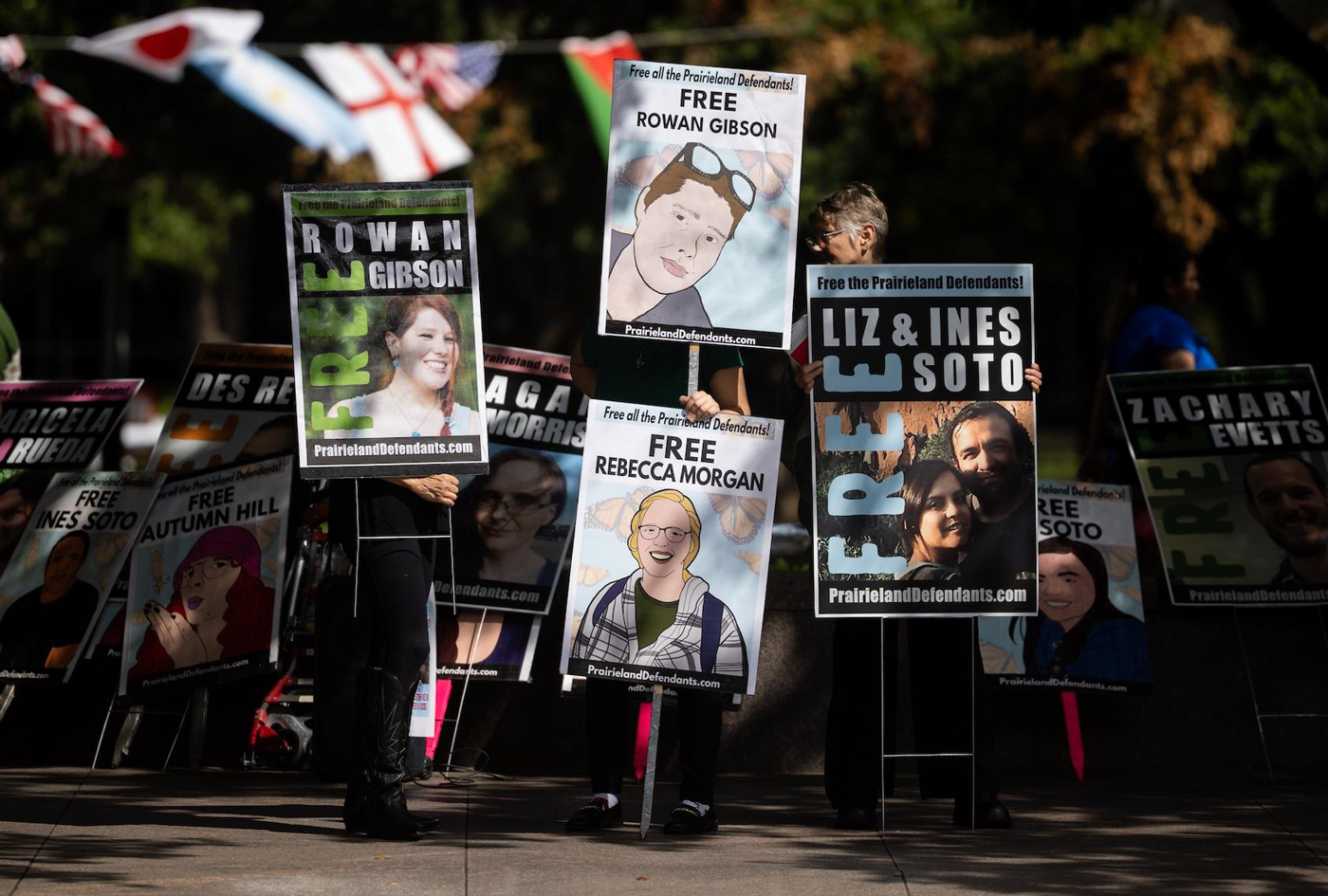
Two defendants accepted pre-written plea deals confirming the state’s fictions. The text invents a fictional antifa cell, takes for granted that antifascist activity is “terrorism,” and argues that wearing black is proof of criminal intent, among other absurdities. After the defendants had spent months in torturous conditions, the state pushed a deadline for agreeing to the pleas under threat of still worse federal indictments. Both Rowan Gibson and Rebecca Morgan, who signed those pleas without giving interviews, have been sentenced to 15 years each.
On an individual level, signing the pleas limited their options. Their potential defenses in regards to their state charges are weakened. The pleas could also be damaging for their codefendants. Some argued that the pleas would be levied against the defendants at trial, cited as proof that some participants agreed to language describing the fictionalized “antifa cell” and supposed plans for an “ambush.” As it turned out, at the federal trial, prosecutors relied more on the testimony of cooperating witnesses, but the pleas remain available to introduce when the state-level charges go to trial.
In addition, the pleas are a liability for the movement as a whole. It has been clear since the Department of Justice’s first press release on July 8 that their chief goal is to use this case to set a precedent and establish a narrative. This is the core of their strategy, and these pleas help them to advance it.
Rowan Gibson and Rebecca Morgan took these deals, despite the bleak outcomes, primarily because of vile jail conditions, mental and physical health problems, and pressure from their lawyers. Their plea deals offer a cautionary example of what can happen in the worst circumstances when defendants do not have enough collective legal support. If their lawyers had been willing to work with the defense committee, take advice from legal experts with a better understanding of the politics around the case, or enter joint defense agreements, these pleas could have been avoided.
On the Defendants Who Testified for the State
All five of the testifying witnesses have now been sentenced. Thomas and Sharp got just over nine years, Sikes and Kent got six, and Baumann got less than two. Across both of the courtrooms, on both sentencing dates, the conservative judges spoke explicitly about sending a message. As for the nine defendants who went to trial, their total of 500 years of prison time represents a clear threat: associate with this ideology in any way and we will bury you. But what message can we read in the disparities among the sentences of the five defendants who testified for the state?
Sentencing for cooperating defendants has traditionally been based on the criminal acts they’re accused of, the timing and extent of their cooperation, and the amount of new and actionable information they provided. This case diverges from the historical precedent.
Thomas was not present in Alvarado, Texas on July 4, 2025. He began cooperating very early in the investigation after his house was raided, and consistently provided evidence following his arrest. His interview on July 12 led to Sharp’s arrest on the 13th, and his subsequent interview on the 14th led to the arrests of Song and Morgan on the 15th, as detailed in the criminal complaints against Rebecca Morgan and Susan Kent. Thomas’s cooperation also contributed to the arrest of Dario Sanchez. Thomas and Sharp pled to one count of material support for terrorism for sheltering Song. Ordinarily, harboring a fugitive can land someone up to a year in prison.
In contrast, Sikes was present at the demonstration, armed, and lit fireworks, which the state argued are explosive devices. He began cooperating with the state in October or November 2025. Based on the timing of arrests, it seems unlikely that Sikes’ cooperation provided much additional actionable information.
Baumann was present at the demo, stayed through the arrival of police lieutenant Thomas Gross, admitted to bringing spray paint, and is the only person on video damaging any property. He agreed to cooperate very early on, but knew none of the participants and could provide very little identifying information.
Precedent would suggest that Baumann would get the heaviest sentence, while Sikes and Thomas would get less. In fact, the reverse occurred. Their sentences set a precedent overwriting the old norms, replacing the old criteria with a loyalty test. In testifying, both Thomas and Sikes willingly betrayed their values. Yet Thomas contradicted the state’s narrative under cross-examination, and Sikes held back on even the most basic key elements, such as the definition of anti-fascism. Baumann didn’t betray his beliefs; he apparently had none. Nor did he betray his comrades—he apparently had no comrades, either. Instead, he proved himself to be an enthusiastic vessel for the state’s most poisonous lies.
The state’s legal argument for terrorism hinges on the property destruction that Baumann alone admitted to. In their flagship NSPM-7 test case, they were willing to let him off easy because he helped them to advance their agenda. NSPM-7 creates a carveout in the judicial system where thought crimes are more important than material acts.
Effective repressive strategies are designed to target specific tactics of resistance, such as the emphasis that our political movements place on refusing to cooperate. This era of authoritarianism introduces a form of repression in which action is practically irrelevant, for it is ideology that is on trial. Previous judicial norms, flawed as they were, are being abandoned in favor of litigating the thoughts, beliefs, and orientations that the Trump regime believes pose a threat to its reign of terror. In this legal purgatory, action becomes irrelevant, evidence becomes optional, and cooperators are not rewarded for contributing to investigations so much as for their readiness to affirm outrageous lies.
Conclusion
The pages of revolutionary history are full of ordinary people who chose to embody courage, fortitude, and commitment, no matter the cost. They are equally full of people—like the cooperating defendants in this trial—who once claimed to believe in freedom, liberation, and struggle, but later proved that they cared more for themselves than for justice.
We are enduring some of the worst authoritarianism that this country has seen in the past fifty years. The actions that people have taken in Prairieland, the Twin Cities, Los Angeles, and elsewhere remind us that even in the midst of killings, torture, and life sentences, radicals across this country will continue to choose the path of resistance, rejecting fear, even if it means risking everything. We recognize that experiencing repression is an inevitable consequence of striving for freedom in a social order that is tightening its grip on us.
The Prairieland trial has shown us the very best and worst of our communities. Benjamin Song could die in prison for potentially saving Nathan Baumann’s life. Baumann will soon walk free for betraying Song’s. Neither one of these things had to be. We must hurry to adapt to this new era of repression. We must educate as many people as possible about the crucial importance of refusing to answer questions from police or federal agents; we must build awareness about grand juries and how to resist them; above all, we must establish stronger legal support infrastructure, including media outreach, to put at the disposal of everyone who may end up in the crosshairs of the state.
Finally, we must continue to support the Prairieland defendants. This case is far from over; the appeals process remains ahead, and how that goes will shape state and federal policy. Repression destroys lives and rips apart families; it is designed to break us. But make no mistake—at its core, their system of violence relies less on what it can do to us than on what it can make us do to each other.
Fire Ant Movement Defense is an anti-repression collective made up of former political defendants and members of defense committees. We believe in mass defense strategies and advise defendants and their supporters on how to fight their cases from a political angle.
We are not lawyers. Through repeated experiences, we have gained skills in media work and in synergizing political and legal strategies. In every case, we work towards building a response to repression that approaches the judicial system as an arena where we can fight—and win.